01

Banff in April

Book Banff

Book Banff National Park Adventures and Attractions. Banff National Park's towering peaks and beautiful meadows make it among Canada's most incredible holiday areas. Plan your Canadian Rockies vacation and Book Banff's most popular attractions.

Book Banff National Park Book Banff
Banff National Park Wildlife

02

Banff National Park

Columbia Icefield Tour & Glacier Skywalk

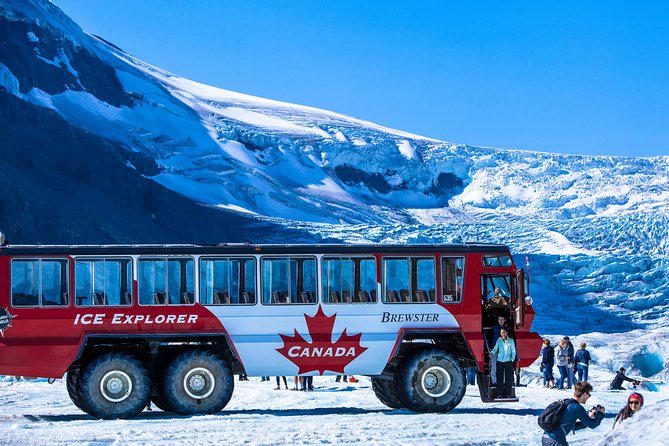
Columbia Icefield Tour including the Glacier Skywalk from Icefield Glacier Discovery Centre. Discover the awe-inspiring mountain scenery and massive glaciers of Alberta's Rocky Mountain region on this Columbia Icefields tour.

Jasper Columbia Icefield Tour & Glacier Skywalk
Book Glacier Skywalk and Athabasca Glacier Tour Jasper Columbia Icefield Home
Jasper Wildlife Tour Videos

03

Banff in April

Banff Gondola Ride Admission

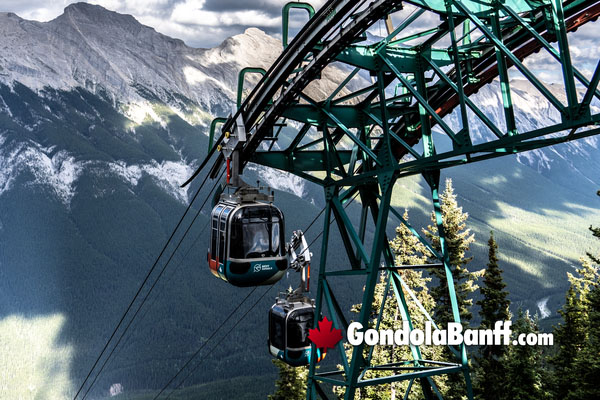
The Popular Banff Gondola provides visitors with an amazing scenic ride to the summit of Sulphur Mountain, offering panoramic views of the Canadian Rockies and the Bow Valley.

Banff Gondola at Sulphur Mountain
*Purchasing Gondola Tickets in Advance is Recommended. Book the Banff Gondola Banff Gondola Home
Banff National Park Wildlife

Canadian Rockies Spring Wildlife Tour - Banff in April

Learn of the steps taken in Canada's National Parks that ensure wildlife survival in the park, and gain insight into Banff's rich ecology, history and geology. This is a must for wildlife and nature lovers.


Canadian Rockies Winter Wildlife Tour - Banff in April

Book Banff's Wildlife Tour

April in Banff National Park

April in Banff is a transitional month; winter lingers in the alpine while spring begins to emerge in the valley. This "shoulder season" offers fewer crowds, variable conditions, and a mix of snow-based and early spring activities.


Things to Do in Banff During April

April in Banff is a transitional month; winter lingers in the alpine while spring begins to emerge in the valley. This "shoulder season" offers fewer crowds, variable conditions, and a mix of snow-based and early spring activities. You can ski in the morning and enjoy a patio coffee in town by afternoon. Temperatures typically range from cool mornings below freezing to mild afternoons, with snow still common at higher elevations.

Banff Spring Skiing & Snowboarding in April

April is prime spring-ski season. Longer daylight hours and softer snow create ideal cruising conditions.
Banff Sunshine Village often stays open into late May, with reliable snowpack thanks to its high elevation.
Lake Louise Ski Resort typically operates into early May and offers wide-open bowls and scenic groomers.
Mount Norquay may close earlier in April, depending on conditions.
Expect lively patios, themed spring events, and comfortable temperatures for skiing without deep-winter cold.

Banff Upper Hot Springs in April

A soak in the Banff Upper Hot Springs is particularly enjoyable in April's crisp air. Snow often remains on surrounding peaks, creating a striking contrast between warm mineral water and cool mountain scenery. It's a restorative option after skiing or hiking.

Banff Gondola & Mountain Views in April

Ride the Banff Gondola to the summit of Sulphur Mountain for panoramic views of the Bow Valley. The boardwalk to Sanson's Peak often remains snow-lined, offering a winter aesthetic with milder conditions. April's quieter pace allows for more relaxed exploration of the interpretive exhibits and mountaintop viewpoints.

Early Season Banff Hiking & Wildlife Viewing in April

Lower-elevation trails begin to clear as the month progresses. Conditions vary widely-expect mud, ice patches, or lingering snow.

Fenland Trail - A relatively flat forest loop ideal for early spring.
Tunnel Mountain - A short climb with expansive town views.
Bow Falls - Accessible year-round and powerful during spring melt.
Wildlife becomes more active in April. Elk, deer, and occasionally bears may be spotted at valley bottom. Carry bear spray and maintain appropriate distance.

Scenic April Banff Drives & Nearby Lakes

Lake Minnewanka often remains partially frozen, creating dramatic ice-meets-water photography opportunities.
Vermilion Lakes are excellent for sunrise reflections and waterfowl sightings.
Lake Louise is typically still frozen in April, offering a classic winter look without peak-season crowds.
The Icefields Parkway remains open, though winter driving conditions may persist.

Banff Dining, Galleries & Local Culture During April

April's quieter tourism period makes it easier to secure restaurant reservations and explore Banff Avenue at a relaxed pace. It's an ideal time to enjoy local cafés, browse mountain art galleries, or visit the Whyte Museum. Some seasonal businesses may operate on reduced hours, so checking ahead is advisable.

Practical Considerations

Weather Variability: Snowstorms are still possible; layering is essential.
Trail Conditions: Microspikes may be useful for icy paths.
Road Safety: Winter tires are recommended, particularly for mountain highways.
Crowds: Significantly lighter than summer, offering a more tranquil experience.

April in Banff offers a compelling blend of seasons-spring energy in town paired with enduring alpine winter landscapes. April is an excellent month for visitors seeking diversity of the "Banff" experience without peak-season congestion.

Banff Gondola During April

In April, the Banff Gondola sits in a transitional season where winter still holds the upper mountain while spring begins to emerge in the valley below.

Banff Gondola During April

Banff Gondola During April

In April, the Banff Gondola sits in a transitional season where winter still holds the upper mountain while spring begins to emerge in the valley below. The experience starts at the base with cool, crisp air and often patchy snow lingering along the forest floor. As the gondola cabins rise steadily up Sulphur Mountain, the scenery shifts noticeably - dark evergreen forests below contrast with increasingly snow-covered slopes above. The ride itself feels quieter than peak summer, with fewer crowds and a more relaxed pace, allowing uninterrupted views of the Bow Valley opening up beneath you.
At the summit, April delivers a distinctly alpine atmosphere. Snow typically blankets the upper terminal area, patios, and surrounding ridgelines, creating a bright, reflective landscape under longer spring daylight. The viewing decks offer crisp, far-reaching visibility, with mountain ranges appearing especially sharp in the cool air. Looking down toward the Banff townsite, you often see a mix of bare ground and melting snow, signaling the seasonal shift underway. The contrast between winter above and early spring below becomes one of the defining visual experiences of an April visit.
The Sulphur Mountain Boardwalk remains a highlight, though it is firmly in winter condition during this time. The wooden pathway is typically snow-packed and can be icy, guiding visitors along the ridge toward Sanson's Peak through a quiet, white landscape. The walk feels more secluded than in summer, with fewer hikers and a sense of stillness that emphasizes the mountain environment. Each viewpoint along the boardwalk reveals layered peaks stretching deep into the Rockies, often framed by lingering snowdrifts.
Inside the upper terminal, April offers a warm contrast to the outdoor chill. Large windows frame the surrounding mountains while visitors gather to thaw out, enjoy a meal, or explore interpretive displays that explain the natural and cultural history of the area. Dining areas and indoor seating become especially inviting in this season, offering elevated views while remaining sheltered from wind and cold. The combination of indoor comfort and immediate access to winter-like conditions just outside creates a balanced, all-weather experience.
Visiting the Banff Gondola in April feels like stepping between seasons. It carries the clarity and quiet of winter at the summit, paired with the subtle renewal of spring in the valley. The result is a less crowded, visually dynamic experience where contrasts - snow and thaw, stillness and change - define the journey from base to peak. Banff Gondola

Jasper Columbia Icefields in April

April at the Columbia Icefield is defined by stillness, cold clarity, and a strong sense of wilderness. For those traveling the Icefields Parkway, it offers a quieter, more atmospheric encounter with one of the Canadian Rockies' most powerful natural features.

Jasper Columbia Icefields in April

Jasper Columbia Icefields in April

In April, the Columbia Icefield presents a landscape that is still firmly locked in winter, despite the calendar turning toward spring. Along the Icefields Parkway, deep snowbanks line the roadside, and the surrounding peaks remain heavily snow-covered. The scale of the icefield feels even more pronounced at this time of year, as fresh snow smooths the terrain and softens the edges of rock and ice. The atmosphere is quiet and expansive, with fewer travelers stopping compared to the summer months, giving the area a more remote and untouched presence.
The Athabasca Glacier dominates the view, appearing bright and almost luminous under the longer daylight of April. Snow often covers much of the glacier's lower reaches, blending it more seamlessly into the surrounding icefield. From the roadside viewpoints, you can see the vast flow of ice descending between rugged mountain walls, though the exact edges and textures of the glacier are less defined than in late summer. The sense of mass and movement remains unmistakable, with the glacier stretching far back into the higher accumulation zones.
At the Columbia Icefield Discovery Centre, operations are typically quieter and more limited compared to peak season. The large viewing windows and outdoor areas still provide excellent vantage points toward the glacier, but the surrounding environment is often windswept and cold. Parking areas and walkways can be snow-covered or icy, and the overall setting feels more like a winter outpost than a busy турист hub. The subdued activity level allows for a more contemplative experience of the landscape.
Access onto the glacier itself is generally not active in the same way as summer. The snowpack and conditions mean that standard visitor transportation onto the ice is typically not running, and independent travel onto the glacier is not advised due to hidden crevasses and unstable snow bridges. Instead, April is more about viewing and understanding the glacier from a distance - watching light shift across its surface, observing weather moving through the valley, and appreciating the immense scale of the icefield.
April at the Columbia Icefield is defined by stillness, cold clarity, and a strong sense of wilderness. It is a time when the environment feels less interpreted and more elemental, with winter conditions persisting at high elevation. For those traveling the Icefields Parkway, it offers a quieter, more atmospheric encounter with one of the Canadian Rockies' most powerful natural features. Jasper Columbia Icefields

Columbia Icefields Glacier Skywalk During April

April emphasizes the raw environment around the Skywalk rather than the structure as an attraction. The Glacier Skywalk experience becomes more about observing the scale of the valley, the lingering force of winter, and the anticipation of the coming season when the Skywalk reopens and the full visitor experience returns.

Columbia Icefields Glacier Skywalk During April

Columbia Icefields Glacier Skywalk During April

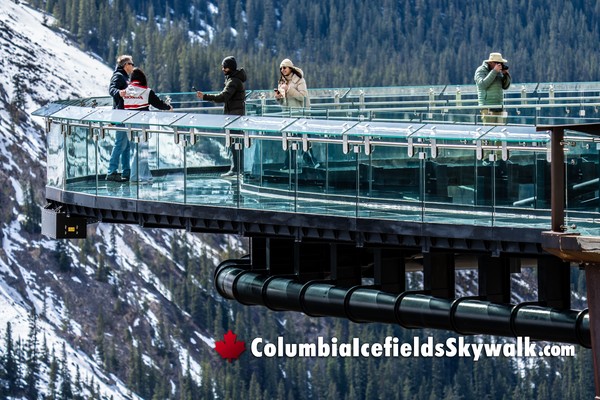
In April, the Columbia Icefield Skywalk sits in a shoulder-season window where winter conditions still dominate the high alpine environment. Perched along the edge of the Sunwapta Valley, the Skywalk is surrounded by deep snow, icy winds, and a landscape that feels far removed from spring. The glass platform extends out over a dramatic drop, but in April the surrounding terrain is often softened by snow, creating a stark white contrast against the dark cliffs and distant peaks.
Operationally, April is typically a transitional period. Regular visitor access to the Skywalk is often not active yet, as the site prepares for the main season. Snow accumulation, ice, and variable weather conditions at this elevation make early spring operations limited or paused. The access road and shuttle system that normally brings visitors from the Columbia Icefield Discovery Centre are usually not running in full capacity, meaning most visitors in April experience the Skywalk only from a distance along the parkway rather than walking out onto it.
Even without stepping onto the structure, the setting itself is compelling. The valley below appears vast and frozen, with the Sunwapta River often still locked in ice or partially buried beneath snow. Wind can move freely through the canyon, adding to the sense of exposure and elevation. The interpretive story of the area - glacial carving, ancient rock layers, and the sheer vertical drop - is easy to visualize when standing nearby, even if access to the glass walkway is unavailable.
April emphasizes the raw environment around the Skywalk rather than the structure as an attraction. It is a time when the landscape feels powerful and unfiltered, with fewer people and minimal infrastructure activity. The experience becomes more about observing the scale of the valley, the lingering force of winter, and the anticipation of the coming season when the Skywalk reopens and the full visitor experience returns. Columbia Icefields Glacier Skywalk

Golden Skybridge in April

April at the Golden Skybridge is less about crossing the bridges and more about encountering the canyon in a raw, in-between season.

Golden Skybridge in April

Golden Skybridge in April

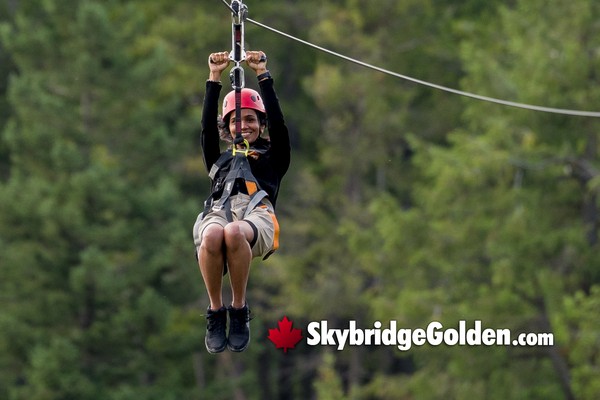
In April, the Golden Skybridge sits in a true shoulder season, where winter conditions are beginning to loosen but the full spring and summer experience has not yet taken hold. The canyon environment around the bridges often remains partially snow-covered, especially in shaded forest sections and along the higher edges of the gorge. The air carries a cool, damp feel, and the Kicking Horse River below is typically beginning its gradual transition from winter ice toward stronger spring flow.
Operationally, April is usually a pre-season period. The full attraction - suspension bridges, village amenities, and adventure activities - often has limited or no regular daily operations yet. Snow, ice, and maintenance work after winter mean that access can be restricted as the site prepares for reopening. Visitors traveling through Golden during this time may find the area quiet, with fewer people and minimal activity compared to the peak summer months when the Skybridge becomes a lively hub.
Even in this quieter state, the setting itself remains dramatic. The deep canyon carved beneath the bridges is steep and rugged, with rock walls that appear darker and more pronounced against lingering snow patches. The waterfalls and streams that feed into the canyon begin to reawaken in April, with meltwater creating early-season flow that hints at the powerful runoff to come. The suspension bridges, when visible, stretch high above the gorge, emphasizing the scale and exposure that define the attraction.
The surrounding forest reflects early spring at elevation. Lower areas may show the first signs of thaw and moisture, while higher sections still hold onto winter. Wildlife activity can increase subtly during this time, and the overall atmosphere feels transitional - quiet, cool, and on the edge of seasonal change. Without the crowds and full operation, the experience leans more toward observing the natural landscape rather than engaging in the full suite of activities.
April at the Golden Skybridge is less about crossing the bridges and more about encountering the canyon in a raw, in-between season. It offers a subdued, atmospheric look at the site before it shifts into its fully developed summer experience, where access, amenities, and adventure elements come fully to life. Golden Skybridge

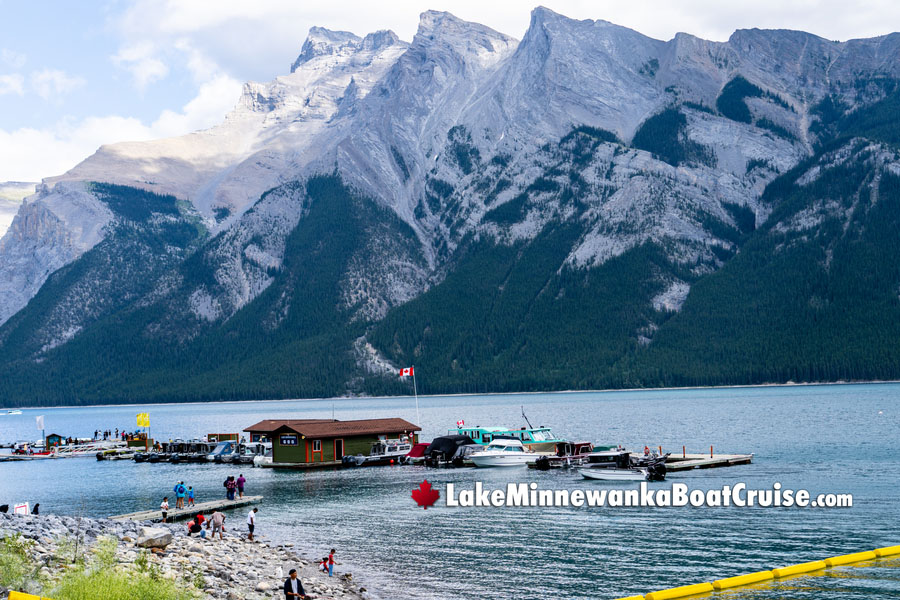
Banff Lake Minnewanka Boat Cruise in April

April at Lake Minnewanka is about anticipation. It offers a peaceful, uncrowded perspective on one of Banff's most popular summer experiences, showing the lake in a quieter, more contemplative state before the season fully begins.

Lake Minnewanka Boat Cruise in April

Banff Lake Minnewanka Boat Cruise in April

In April, the Lake Minnewanka sits in a late-winter, early-spring transition that keeps the shoreline quiet and the water cold and often partially frozen. The lake can still hold sheets of ice, especially along the edges and in shaded bays, while the surrounding peaks remain snow-covered. The road to the lake is typically accessible, but the atmosphere is far removed from the busy summer marina scene - April feels calm, open, and distinctly off-season.
The Lake Minnewanka Boat Cruise itself is not operating in April. Ice conditions, cold water temperatures, and unpredictable spring weather prevent boats from running this early in the season. The docks and cruise vessels are usually still in their winter state, and the shoreline facilities are either closed or operating in a very limited capacity. Instead of boarding a boat, visitors experience the lake from land, where the stillness of the setting becomes the main attraction.
Walking along the lakeshore during this time reveals a raw, elemental landscape. Snow patches linger on the ground, and the wind coming off the lake can be sharp and cold. The water that is visible appears deep blue and incredibly clear, contrasting with the white ice and surrounding mountain slopes. Looking across the lake, the scale of the valley and the distant ranges stands out even more without summer crowds or boat traffic.
The day-use area and surrounding viewpoints offer space to take in the scenery at a slower pace. Without the movement of cruise boats or rental activity, the lake feels larger and more isolated. The quiet is broken only by wind, shifting ice, or the occasional wildlife movement along the shoreline. It becomes less of a guided experience and more of a personal encounter with the landscape.
April at Lake Minnewanka is about anticipation. The infrastructure for the boat cruise is present but dormant, and the environment is in the process of changing. It offers a peaceful, uncrowded perspective on one of Banff's most popular summer experiences, showing the lake in a quieter, more contemplative state before the season fully begins. Banff Lake Minnewanka Boat Cruise

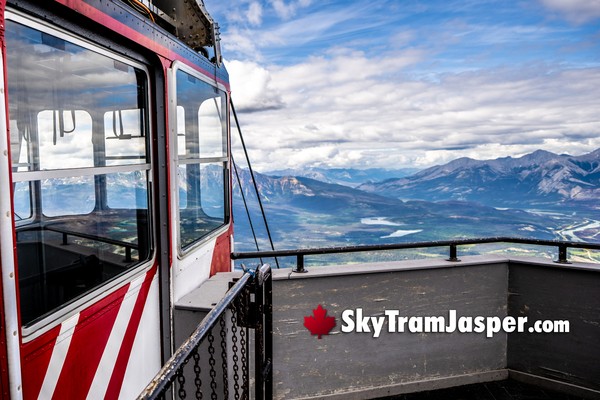
Jasper SkyTram Opens in April

In April, the Jasper SkyTram opens, with the entire experience coming out of winter closure, opening for Sppring and the upcoming summer.

Jasper SkyTram Opens in April

Jasper SkyTram Opens in April

In April, the Jasper SkyTram opens, with the entire experience coming out of winter closure, opening for Sppring and the upcoming summer. The lower terminal area sits quieter at the base of Whistlers Mountain, often surrounded by lingering snowbanks and early spring melt. Access roads are typically open, but there is little to no operational activity, giving the site a still, almost dormant feel compared to the busy summer months.
The tram itself just begins running in April. Cabins and cables stretch up the mountain, emphasizing the steep rise toward the upper terminal. The movement of cars ascending and descending starts, with the focus shifting to the scale of the mountain and the elevation the tram. Looking upward, the upper station is often set against a backdrop of snow-covered slopes, reinforcing how firmly winter conditions persist at higher altitude.
Higher up, the summit area remains fully alpine in character. Deep snow, cold temperatures, and exposed terrain dominate the upper reaches of Whistlers Mountain. The hiking trail that typically leads from the upper terminal to the summit is buried under snow and not maintained, making access impractical and unsafe for most visitors. The environment at elevation in April is closer to late winter than spring, with strong winds and rapidly changing weather still common.
From the valley floor, however, the setting offers a different kind of experience. The surrounding landscape begins its gradual transition toward spring, with patches of bare ground appearing and wildlife becoming more active. The contrast between the thawing valley and the frozen upper mountain is pronounced, mirroring what the SkyTram would normally reveal during its ascent.
April at the Jasper SkyTram is about stillness and anticipation rather than activity. It is a time when the infrastructure is in place but inactive, and the mountain environment remains in winter's grip. The experience becomes more observational - taking in the vertical scale, the seasonal contrast, and the quiet pause before the tram resumes operation and the full alpine experience returns. Jasper SkyTram

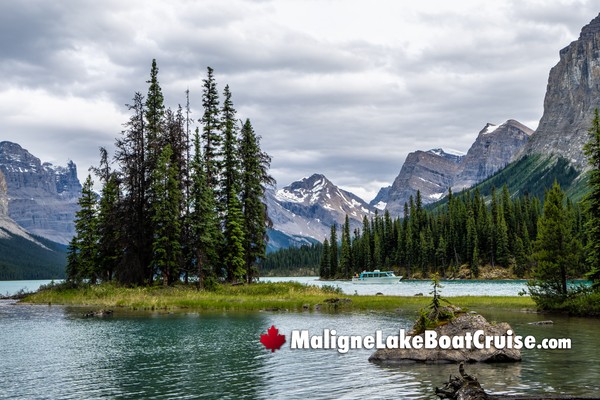
Maligne Lake Boat Cruise During April

April at Maligne Lake is defined by stillness, cold clarity, and a strong sense of seasonality. It is a time when the boat cruise is paused, and the lake exists in a more raw, untouched state.

Maligne Lake Boat Cruise During April

Maligne Lake Boat Cruise During April

In April, the Maligne Lake remains firmly in a late-winter state, with conditions that feel far removed from the busy summer season. The lake is typically still frozen or in the early stages of breaking up, with thick ice covering much of its surface and snow lingering along the shoreline and surrounding forests. The drive out to the lake carries a quiet, remote feeling, with fewer vehicles and a strong sense of isolation as the road winds deeper into the mountains.
The Maligne Lake Boat Cruise is not operating in April. Ice conditions make navigation impossible, and all cruise infrastructure - docks, boats, and lakeside facilities - remains in its winter state. The area around the boathouse is typically closed or minimally accessible, and there is no active movement on the water. Instead of the familiar departure toward Spirit Island, the lake sits still and silent, with the iconic destination unreachable except in imagination.
The landscape itself becomes the primary experience. Snow-covered peaks rise sharply around the lake, and the frozen surface stretches out like a pale, expansive plain. On clearer days, the surrounding mountains reflect softly off any exposed patches of water, while overcast conditions can give the entire scene a muted, monochromatic tone. The scale of the lake feels even more pronounced without boats or human activity, emphasizing its depth and length.
April also brings a sense of transition. Subtle signs of thaw may begin along the edges, with meltwater forming near the shoreline and snow starting to soften under longer daylight hours. Wildlife activity can increase slightly in the surrounding forest, though the high elevation keeps the overall environment cold and quiet. The famous Hall of the Gods section of the lake remains hidden beneath ice, its dramatic cliffs and reflections waiting for the open-water season.
April at Maligne Lake is defined by stillness, cold clarity, and a strong sense of seasonality. It is a time when the boat cruise is paused, and the lake exists in a more raw, untouched state. The experience shifts from a guided journey across water to a quiet encounter with a frozen alpine landscape, offering a very different perspective on one of Jasper's most iconic destinations. Maligne Lake Boat Cruise

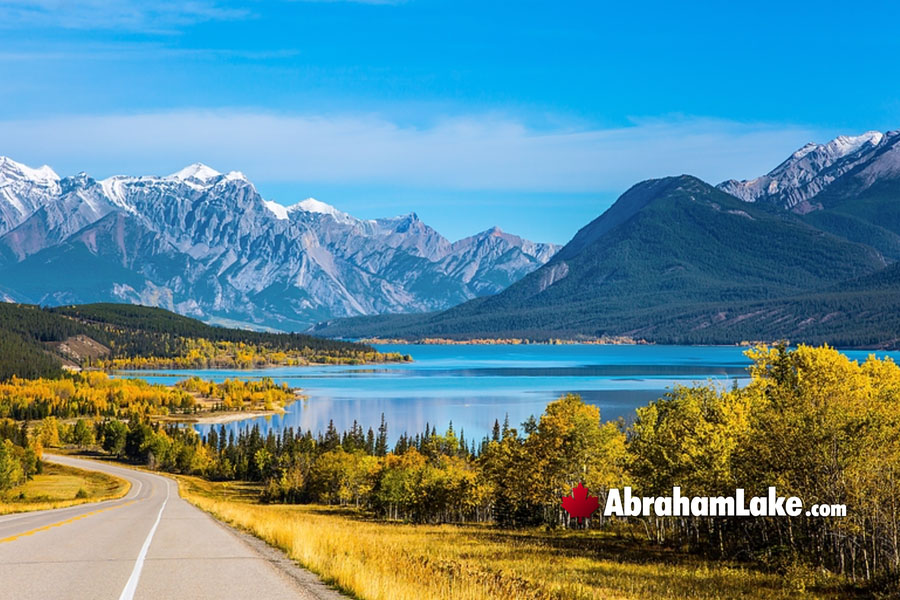
April at Abraham Lake

April at Abraham Lake is about transition and unpredictability. It marks the final chapter of the frozen season, where the iconic ice features are still present but fading, and the lake begins its shift toward open water.

April at Abraham Lake

April at Abraham Lake

In April, the Abraham Lake sits in a striking transitional phase where winter's signature features begin to give way to early spring change. This is one of the last opportunities to witness the lake's famous frozen methane bubbles before the ice deteriorates. The surface is often still partially frozen, but conditions can vary quickly - sections of clear ice may remain, while other areas begin to fracture, soften, or pull away from the shoreline. The setting feels raw and exposed, with strong winds sweeping across the open basin and snow lingering along the surrounding ridges.
The surrounding landscape along the David Thompson Highway remains rugged and quiet in April. Snow-covered peaks and rolling foothills frame the lake, while the water itself shifts between opaque white ice, translucent blue patches, and emerging open water. The contrast can be dramatic - on one side, solid ice formations with trapped air bubbles layered beneath the surface, and on the other, dark, wind-driven water signaling the seasonal transition. The famous bubble formations are still visible early in the month, but they become harder to access safely as the ice weakens.
Conditions on the lake demand caution. Ice thickness becomes unpredictable in April, and areas that appear solid may be unstable due to warming temperatures and underlying currents. Cracks, pressure ridges, and melt zones can develop rapidly, especially during warmer days or after strong winds. Walking out onto the ice is generally not advised unless conditions are clearly stable and well understood, and even then, the risk increases significantly compared to mid-winter.
Visually, April offers a unique version of Abraham Lake that differs from both winter and summer. The light is stronger, the skies often clearer, and the mix of ice and water creates constantly changing reflections and textures. Photographers are drawn to this period for its dynamic conditions, where remnants of winter's patterns meet the first signs of open water movement. The surrounding mountains remain snow-covered, adding depth and contrast to the evolving lake surface.
April at Abraham Lake is about transition and unpredictability. It marks the final chapter of the frozen season, where the iconic ice features are still present but fading, and the lake begins its shift toward open water. The experience feels untamed and atmospheric, offering a brief window where two seasons overlap in a powerful and visually compelling way. Abraham Lake

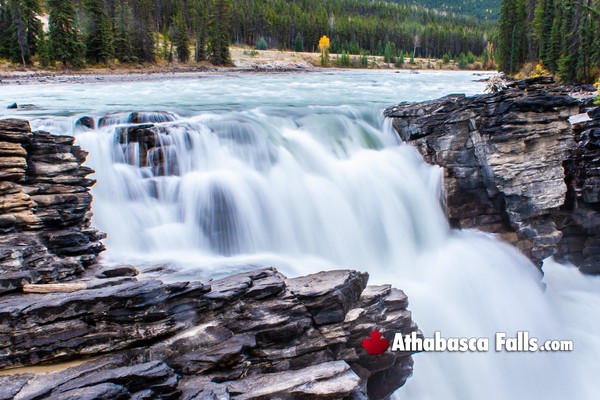
Athabasca Falls During April

April at Athabasca Falls is defined by contrast - moving water against frozen edges, exposed rock against snow-covered surroundings. It is a quieter time to visit, with fewer crowds and a more raw, natural atmosphere. The falls feel powerful yet more intricate.

Athabasca Falls During April

Athabasca Falls During April

In April, the Athabasca Falls is in a transitional phase where winter ice and early spring flow combine into a powerful, evolving scene. The falls do not freeze solid, so water continues to surge year-round, but in April the volume is typically lower than the peak summer runoff. What makes this time unique is the mix of exposed rushing water cutting through partially frozen channels, with ice formations still clinging to the canyon walls and edges of the river.
Approaching the falls, the surrounding landscape remains snow-covered, with packed snow and icy sections along the main pathways and viewpoints. The Athabasca River flows steadily toward the drop, appearing darker and more defined against the lingering snow. As the water plunges into the canyon, you can see how it has carved through layers of rock, creating deep potholes and narrow chutes. In April, these features are often highlighted by a combination of flowing water and frozen edges, giving a clearer view of the canyon's structure than during peak flow months.
The viewing platforms provide a close look at the force of the falls, though conditions can be slippery and require careful footing. Ice buildup around railings and rocks is common, and the mist from the falls can freeze on contact, adding to the rugged feel of the environment. The sound of the water remains constant and powerful, echoing through the canyon even when the overall flow is not at its strongest.
One of the most striking aspects of visiting in April is the visibility of the lower canyon. With reduced water volume compared to summer, more of the rock formations and carved channels become visible downstream. You can observe how the river twists and narrows, cutting through the landscape over time. This offers a more detailed perspective on the geological forces at work, rather than just the overwhelming volume of water seen later in the season.
April at Athabasca Falls is defined by contrast - moving water against frozen edges, exposed rock against snow-covered surroundings. It is a quieter time to visit, with fewer crowds and a more raw, natural atmosphere. The falls feel powerful yet more intricate, revealing both their force and the finer details of their formation during this in-between season. Athabasca Falls

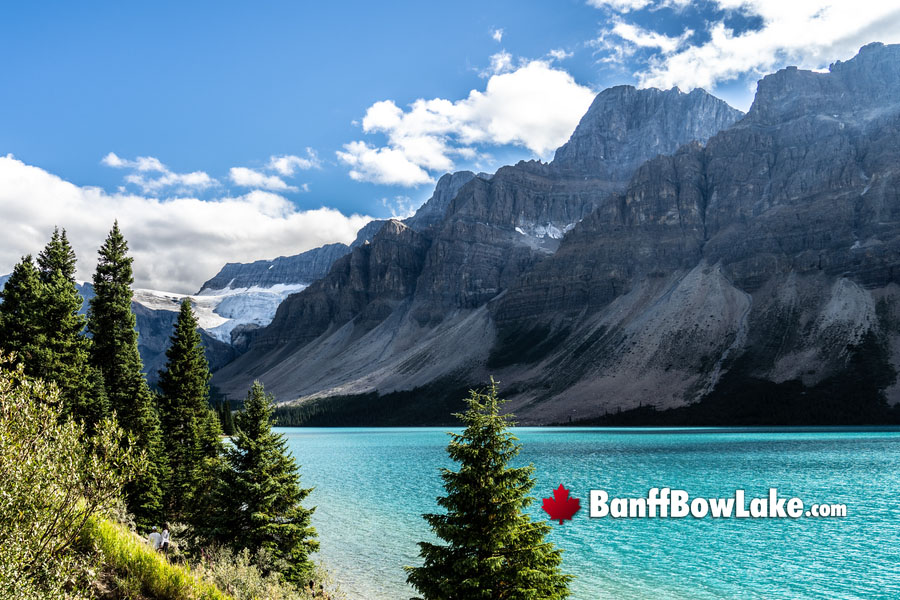
Banff Bow Lake in April

Bow Lake in April is defined by quiet isolation and lingering winter conditions. The experience centers on taking in the raw alpine environment, where snow, ice, and mountain light shape a calm and understated version of one of Banff's most iconic roadside stops.

Banff Bow Lake in April

Banff Bow Lake in April

In April, the Bow Lake remains largely in a winter state, with the lake typically still frozen beneath a blanket of snow and ice. Set along the Icefields Parkway, the scene feels quiet and expansive, with fewer visitors stopping compared to the busy summer season. The surrounding peaks - including the prominent Bow Summit area - rise sharply above the lake, their slopes still heavily covered in snow, reinforcing the sense that winter lingers strongly at this elevation.
The lake surface in April often appears as a smooth, white expanse, occasionally broken by wind-swept textures or subtle depressions where snow has shifted. In some years, depending on temperature patterns, early signs of thaw may begin near the shoreline, but full melt is still weeks away. The iconic turquoise color Bow Lake is known for remains hidden beneath the ice, replaced instead by a monochrome palette of whites, greys, and deep alpine shadows.
Along the shoreline, snowbanks can still be deep, and access points may be partially covered or uneven. The historic Num-Ti-Jah Lodge stands quietly nearby, often closed or operating minimally during this shoulder season. Without the presence of canoes, hikers, or lakeside activity, the setting takes on a more remote, contemplative feel. The stillness is broken only by wind moving across the ice or the occasional distant sound echoing through the valley.
Visually, April offers a stark and clean perspective of Bow Lake. The surrounding mountains and glaciers dominate the view, reflecting soft light across the snow-covered surface. On clear days, the contrast between bright snow and deep blue sky creates a crisp, high-alpine atmosphere, while overcast conditions can give the entire landscape a subdued, almost muted tone.
Bow Lake in April is defined by quiet isolation and lingering winter conditions. It is not yet the vibrant, accessible lakeside destination of summer, but instead a place of stillness and scale. The experience centers on taking in the raw alpine environment, where snow, ice, and mountain light shape a calm and understated version of one of Banff's most iconic roadside stops. Banff Bow Lake

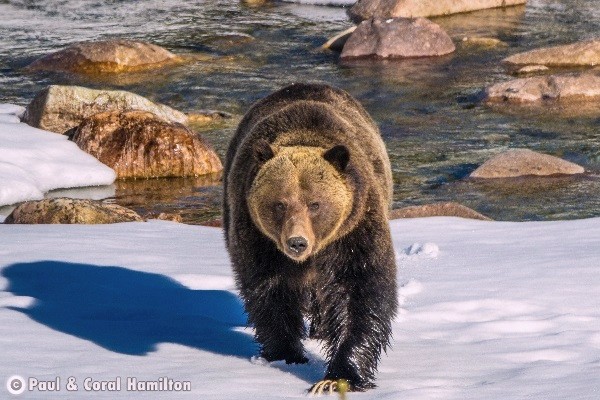
Banff Wildlife During April

April wildlife viewing is defined by movement and transition. Animals are emerging, feeding, and redistributing themselves across the landscape. The combination of melting snow, exposed terrain, and increased activity makes it one of the more engaging times to observe wildlife, especially in lower elevations where spring arrives first while higher alpine areas remain in winter's grip.

Banff Wildlife During April

Banff Wildlife During April

In April across Banff National Park and Jasper National Park, wildlife activity begins to noticeably increase as the transition from winter to spring takes hold - especially at lower elevations. Snow starts to recede in valley bottoms, exposing grasses and early vegetation that draw animals out of deeper forest cover. This creates one of the more dynamic viewing periods of the year, where animals are active, visible, and moving with purpose as they respond to changing conditions.
Elk are among the most commonly seen animals in April, often grazing in open areas near roads, riverbanks, and townsites such as Banff townsite and Jasper townsite. After a long winter, they feed heavily on newly exposed vegetation, and their presence is frequent in valley corridors. Deer species, including mule deer and white-tailed deer, show similar behavior, often appearing in the same accessible areas where snow has melted first.
Large ungulates like moose and bighorn sheep also become more visible. Moose tend to remain near wetlands and slow-moving waterways, browsing on shrubs and early plant growth, while bighorn sheep are often spotted along rocky slopes and roadside cliffs where snow melts quickly. In places like the Icefields Parkway and open valley edges, these animals can be seen moving between feeding zones, taking advantage of emerging forage.
Predators begin to follow this increased prey activity. Wolves and coyotes are more active across valley systems, though they are less commonly seen than their prey. April is also a sensitive time for bears - both black bears and grizzlies begin to emerge from hibernation. Early in the season, sightings are possible at lower elevations where snow has cleared, particularly along highways and open slopes. These animals are focused on finding food and rebuilding energy reserves, and their movements can be unpredictable.
Birdlife becomes more noticeable as well. Early migratory birds return, and species such as ravens, eagles, and waterfowl become more active around rivers, lakes, and thawing wetlands. The soundscape shifts from the quiet of winter to a more active environment, with bird calls and movement adding to the sense of seasonal change.
April wildlife viewing is defined by movement and transition. Animals are emerging, feeding, and redistributing themselves across the landscape. The combination of melting snow, exposed terrain, and increased activity makes it one of the more engaging times to observe wildlife, especially in lower elevations where spring arrives first while higher alpine areas remain in winter's grip. Canadian Rockies Wildlife Wildlife On Video

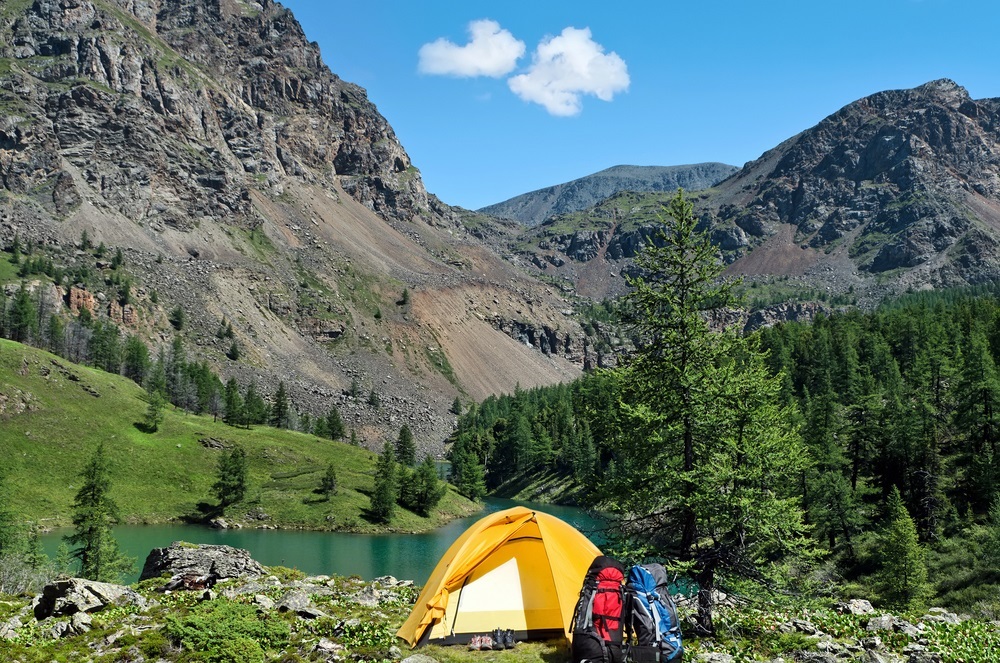
Camping in Banff During April

Camping in Banff in April is best suited for those prepared for cold-weather camping and limited infrastructure. It offers a peaceful, uncrowded experience, but requires careful planning, proper gear, and an understanding that winter conditions are still very much present across much of the park.

Camping in Banff During April

Camping in Banff During April

Camping in April in Banff National Park is very much a shoulder-season experience shaped by lingering winter conditions rather than early spring comfort. Most campgrounds are still closed or only partially open, with services limited or unavailable. Snow can still cover large portions of the ground, especially at higher elevations, and overnight temperatures frequently drop below freezing. This makes April camping less about convenience and more about preparation and resilience in cold-weather conditions.
Front-country camping options are minimal. A few campgrounds near the Banff townsite, such as Tunnel Mountain Village, may begin limited operations depending on the year, but full services like running water, showers, and visitor facilities are often not fully active yet. Campsites that are open tend to be basic, with reduced amenities and fewer staff on-site. The environment is quiet and uncrowded, offering a stark contrast to the busy summer camping season.
The ground conditions are one of the biggest factors. Snowpack can still be present in shaded areas, and melt cycles during the day often lead to wet, muddy terrain. Campsites may have a mix of ice, slush, and exposed ground, making it important to choose gear suited for variable conditions. A four-season tent, insulated sleeping pad, and a cold-rated sleeping bag are essential, as nighttime temperatures can feel more like winter than spring.
Backcountry camping in April is significantly more demanding and typically falls into winter travel conditions. Trails are often snow-covered, route finding can be difficult, and avalanche risk remains a serious consideration in alpine and subalpine terrain. Specialized equipment such as snowshoes or skis may be required, along with knowledge of snow safety and navigation. For most visitors, April is not considered a beginner-friendly time for backcountry camping in Banff.
Despite the challenges, there are distinct advantages. The park is exceptionally quiet, with far fewer people and a strong sense of solitude. Wildlife activity begins to increase at lower elevations, and the contrast between snow-covered mountains and thawing valley floors creates a visually striking setting. Clear, crisp nights can offer excellent stargazing, and the overall atmosphere feels raw and untamed.
Camping in Banff in April is best suited for those prepared for cold-weather camping and limited infrastructure. It offers a peaceful, uncrowded experience, but requires careful planning, proper gear, and an understanding that winter conditions are still very much present across much of the park. Banff Camping

Hiking in April

Hiking in Banff in April is best approached as early-season, mixed-condition travel. The experience is less about reaching high alpine destinations and more about exploring accessible valley routes while respecting that winter still dominates much of the landscape.

Hiking in April

Hiking in April

Hiking in April in Banff National Park is defined by a strong divide between valley-bottom accessibility and full winter conditions at higher elevations. While the calendar suggests spring, the mountains are still firmly in a late-winter pattern. Lower elevation trails begin to thaw and open up, but anything that gains elevation quickly transitions into snow-covered terrain. This creates a mixed hiking environment where route choice and preparation matter more than distance or difficulty alone.
At lower elevations around the Bow Valley and near the Banff townsite, hiking becomes more feasible as snow melts away from exposed trails. Paths along valley floors, river corridors, and south-facing slopes can be partially clear, though often muddy or icy in sections. Early spring conditions mean you may encounter everything from dry dirt to slush and packed ice within a single hike. Traction devices like microspikes are often useful, especially in shaded areas where ice persists.
Popular canyon-style hikes such as Johnston Canyon remain accessible but still feel like winter hikes. The trail surface is typically icy, with packed snow along the walkways and bridges. Water continues to flow beneath frozen edges, creating a dramatic mix of ice formations and rushing water. Railings, viewing platforms, and narrow sections require careful footing, but the visual contrast of frozen and flowing water makes these routes especially striking in April.
As elevation increases, trails quickly return to full winter conditions. Routes leading toward alpine areas, passes, or higher lakes remain buried under deep snow and are not maintained for hiking. Without snowshoes or skis, travel becomes difficult and often unsafe. Avalanche risk is still present in many areas, particularly on slopes above treeline or along steep terrain. Trails that are popular in summer - such as those around Lake Louise or up toward high viewpoints - are generally still snowbound and require winter travel knowledge.
One of the defining characteristics of April hiking is variability. Conditions can change rapidly depending on temperature, sun exposure, and recent weather. Warm afternoons may soften trails into mud, while mornings can be frozen and firm. This daily freeze-thaw cycle affects footing and pace, making it important to plan shorter, flexible outings rather than committing to long or remote routes.
Hiking in Banff in April is best approached as early-season, mixed-condition travel. It offers quieter trails, emerging wildlife activity, and a unique blend of winter scenery with hints of spring. The experience is less about reaching high alpine destinations and more about exploring accessible valley routes while respecting that winter still dominates much of the landscape. Hiking

Icefields Parkway During April

Driving the Icefields Parkway in April is a distinctly different experience from the peak summer season, defined by winter conditions that still dominate the high elevations between Banff National Park and Jasper National Park.

Icefields Parkway During April

Icefields Parkway During April

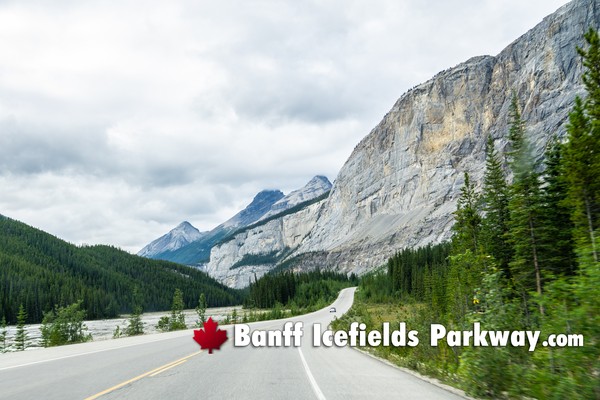
Driving the Icefields Parkway in April is a distinctly different experience from the peak summer season, defined by winter conditions that still dominate the high elevations between Banff National Park and Jasper National Park. The road itself is typically open and maintained year-round, but it feels quieter and more remote, with fewer vehicles and long stretches where you may not encounter many other travelers. Snowbanks line the highway, and the surrounding peaks remain fully snow-covered, giving the entire drive a crisp, alpine atmosphere.
Visually, April offers a striking landscape. Glaciers, icefields, and mountain faces appear especially sharp in the cool air, and the lack of summer haze enhances long-distance visibility. Many lakes along the route - such as Bow Lake and Peyto Lake - remain frozen, appearing as wide, white expanses rather than their familiar turquoise. The Columbia Icefield stands out as a dominant feature, with fresh snow often smoothing its surface and blending it into the surrounding terrain. Waterfalls like Athabasca Falls continue to flow, framed by ice formations and snow-covered canyon walls.
Services along the parkway are very limited in April. Many seasonal stops, cafés, and facilities are still closed, including smaller lodges and viewpoints that only operate in summer. Fuel is not available directly on the parkway during this time, so it is important to start with a full tank from either Banff or Jasper. Rest areas may be open but basic, and travelers should be prepared for long stretches without amenities.
Driving conditions require attention. Weather can change quickly, and snowstorms are still possible throughout April. Sections of the highway may be snow-covered or icy, particularly in the early morning or after fresh snowfall. Wildlife is also more active in spring, often appearing along roadside corridors where snow has melted first. Reduced traffic can make these encounters more frequent but also requires drivers to remain alert.
The Icefields Parkway in April feels more like a winter expedition than a spring road trip. It offers solitude, dramatic snow-covered scenery, and a raw sense of scale across the Rockies. The experience is quieter and less structured, with fewer services but a more immersive connection to the landscape as it slowly transitions toward the warmer months. Banff Icefields Parkway

Johnston Canyon During April

Visiting Johnston Canyon in April is about experiencing a seasonal crossover. It retains the dramatic ice features of winter while introducing the energy of spring runoff. The trail is quieter than in summer, and the atmosphere feels more raw and immersive, but it requires proper footwear and caution.

Johnston Canyon During April

Johnston Canyon During April

In April, the Johnston Canyon offers a hybrid experience that blends the final stages of winter with the early movement of spring water. The canyon remains cold and shaded, which allows snow and ice to persist longer here than in more open areas of the park. As a result, the trail feels more like a winter hike than a spring walk, with packed snow and ice covering much of the pathway, especially along the metal catwalks that cling to the canyon walls.
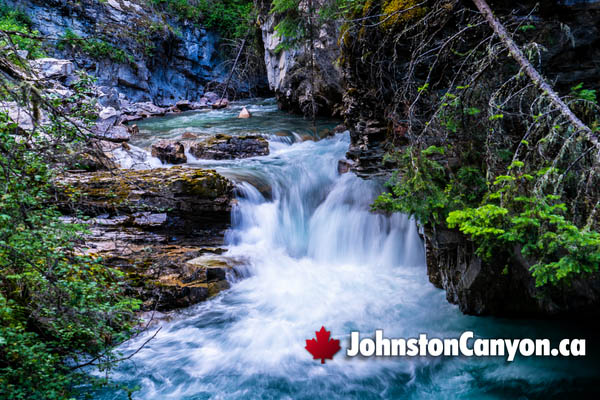
The hike to the Lower Falls is typically accessible, but footing can be slippery. Microspikes or traction devices are often necessary to move confidently along the icy sections. As you follow the canyon, the sound of rushing water grows stronger, echoing through the narrow rock walls. In April, the falls themselves are particularly striking - partially frozen formations cling to the cliffs while water continues to surge through and beneath the ice. This combination creates a layered effect, where you can see and hear both solid ice and active flow at the same time.
Continuing toward the Upper Falls, conditions remain similar but often slightly more variable. Some sections may begin to show early melt, while others stay firmly frozen in shadow. The Upper Falls area in April can feel more rugged and less crowded, with fewer people venturing farther along the trail. Here, the waterfall appears taller and more exposed, with ice formations gradually breaking apart as temperatures rise, revealing more of the underlying rock and water flow.
The canyon environment itself is one of the highlights during this time of year. The vertical walls are lined with frozen seepage, icicles, and snow-covered ledges, while the creek below pushes through narrow channels carved over time. The contrast between movement and stillness - flowing water against frozen edges - defines the visual experience. Light filtering into the canyon adds depth, with bright highlights on ice and darker tones in the rock and water below.
Visiting Johnston Canyon in April is about experiencing a seasonal crossover. It retains the dramatic ice features of winter while introducing the energy of spring runoff. The trail is quieter than in summer, and the atmosphere feels more raw and immersive, but it requires proper footwear and caution. It is one of the best places in Banff to see how water, ice, and rock interact during the shift between seasons. Johnston Canyon

Lake Louise in April

Lake Louise in April offers a winter landscape at its most expansive and accessible. It is less about lakeside strolling or canoeing and more about experiencing the scale of the frozen lake and its surrounding peaks.

Lake Louise in April

Lake Louise in April

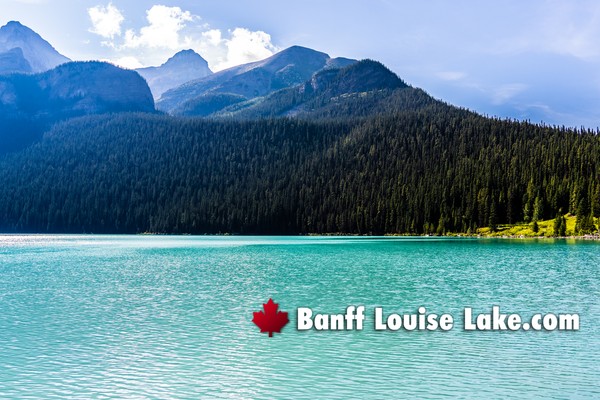
In April, the Lake Louise remains firmly in winter conditions, despite the shift toward spring elsewhere in the Rockies. The lake is still completely frozen, covered by a thick layer of ice and snow that transforms it into a wide, open expanse beneath towering peaks. The iconic turquoise color is hidden at this time of year, replaced by a bright, snow-covered surface that reflects the surrounding mountains and sky.
The setting feels calm and spacious compared to the busy summer months. The shoreline and lake surface are often walkable, depending on conditions, with visitors spreading out across the frozen lake. Snowshoeing and winter walking are common, and the flat terrain allows for easy exploration toward the far end of the lake. The towering backdrop of Victoria Glacier appears especially dramatic in April, framed by snow-covered slopes and crisp alpine light.
Along the lakeshore, the historic Fairmont Chateau Lake Louise provides a warm contrast to the cold outdoor environment. The area around the hotel is typically maintained, but beyond that, snowpack remains significant. Trails leading up from the lake - such as those toward Lake Agnes or the Plain of Six Glaciers - are still buried under deep snow and fall into winter travel conditions rather than standard hiking routes.
April conditions bring a mix of bright days and cold temperatures. The sun sits higher and days are longer, which enhances visibility and creates strong reflections off the snow and ice. However, mornings and evenings remain cold, and wind sweeping across the frozen lake can make it feel even colder. The overall atmosphere is crisp and quiet, with fewer crowds than peak summer but still a steady flow of visitors drawn to the iconic setting.
Lake Louise in April offers a winter landscape at its most expansive and accessible. It is less about lakeside strolling or canoeing and more about experiencing the scale of the frozen lake and its surrounding peaks. The combination of snow-covered terrain, clear mountain views, and a quieter environment creates a serene and visually powerful version of one of Banff's most famous locations. Banff Lake Louise

Moraine Lake in April

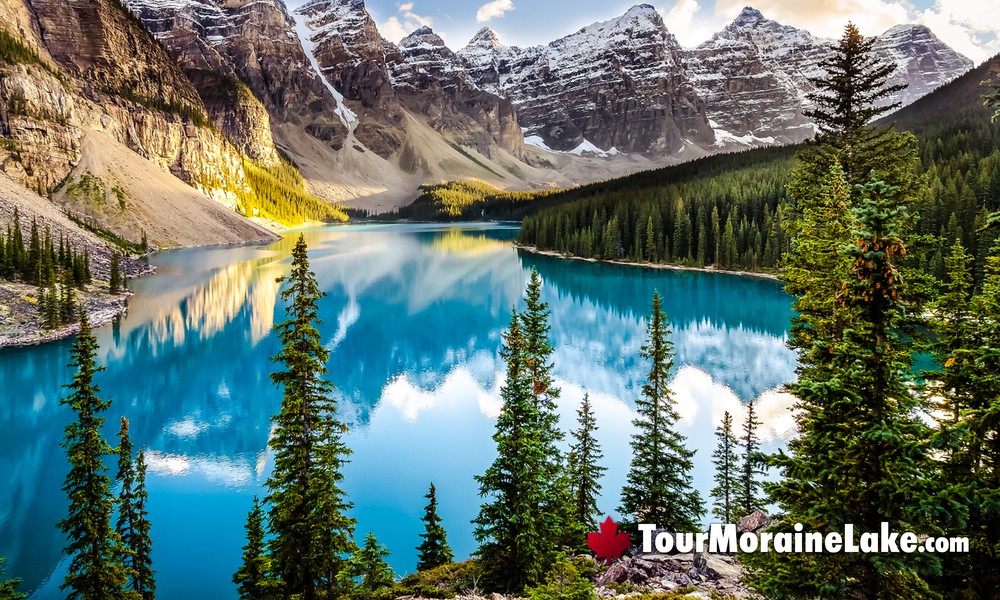
Moraine Lake in April exists as a hidden location. For most travelers, Moraine Lake becomes a destination to plan for later in the season, when the road opens and the lake's full character returns.

Moraine Lake in April

Moraine Lake in April

In April, the Moraine Lake is essentially inaccessible, as the access road is closed for the winter season. The Moraine Lake Road remains snow-covered and unmaintained, and there is no vehicle access to the lakeshore. This closure typically extends well into late spring or early summer, meaning that April visitors cannot reach the lake by standard means.
The surrounding Valley of the Ten Peaks remains deeply snowbound during this time. Even if one were to approach the area by backcountry travel methods such as skiing or snowshoeing, the conditions are fully winter-based. Deep snowpack, avalanche risk, and rapidly changing weather make travel in this area complex and suitable only for those with proper equipment and experience in winter mountain travel.
At the lake itself, conditions are still firmly in winter. The water is completely frozen beneath a thick layer of snow and ice, and the famous turquoise color is not visible. The iconic rockpile viewpoint is buried under snow, and the entire landscape appears as a broad, white basin surrounded by towering, snow-covered peaks. The dramatic scenery is still present, but it takes on a more subdued, monochrome tone compared to the vibrant blues of summer.
Because there is no regular access or infrastructure available, April is not a practical time to plan a visit to Moraine Lake for typical sightseeing. There are no open facilities, no transport options, and no maintained trails leading to the lake. The experience shifts from a popular, easily accessible destination to a remote alpine environment that is effectively in winter closure.
Moraine Lake in April exists as a hidden location - present but out of reach for most visitors. It remains locked in winter conditions, with access restricted and the landscape unchanged from the colder months. For most travelers, it becomes a destination to plan for later in the season, when the road opens and the lake's full character returns. Moraine Lake

April at Peyto Lake

Peyto Lake in April offers a quiet, snow-covered version of one of Banff's most recognizable viewpoints. It is less about the lake's vibrant color and more about the shape, scale, and alpine setting.

April at Peyto Lake

April at Peyto Lake

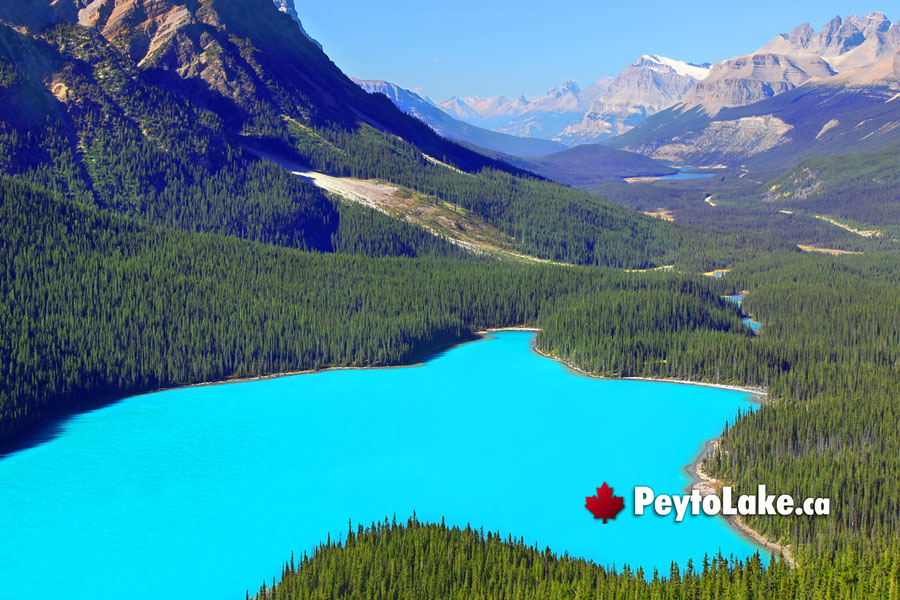
In April, the Peyto Lake remains firmly in a winter landscape, with the lake still completely frozen beneath a thick layer of snow and ice. From the viewpoint near Bow Summit, the iconic wolf-shaped outline of the lake is visible, but its famous turquoise color is hidden at this time of year. Instead, the lake appears as a smooth, white expanse stretching through the valley, framed by heavily snow-covered peaks.
The short walk from the parking area to the main viewpoint is usually accessible, but it is still very much a winter-style path. Snow and ice cover the trail, and traction devices are often helpful for stability, especially on the slightly uphill sections. The forested approach feels quiet and subdued, with snow lingering on branches and the ground, adding to the sense of being in a high-elevation environment where winter is slow to release its hold.
At the viewpoint, April offers exceptionally clear and crisp views. The cold air often enhances visibility, allowing you to see far into the surrounding mountain ranges. The contrast between the bright snow, dark evergreen forest, and deep shadows in the valley creates a clean, high-definition look across the landscape. Without the crowds of summer, the viewing platform can feel more open and relaxed, giving time to take in the full scale of the scene.
Conditions can still be cold and windy at this elevation, and weather can shift quickly. Snowfall is still possible, and the exposed viewpoint can feel significantly colder than lower areas of the park. Despite longer daylight hours, temperatures remain low enough to preserve the winter character of the lake and surrounding terrain.
Peyto Lake in April offers a quiet, snow-covered version of one of Banff's most recognizable viewpoints. It is less about the lake's vibrant color and more about the shape, scale, and alpine setting. The experience feels calm and expansive, with winter scenery still fully in place as the landscape slowly transitions toward spring. Peyto Lake

Spirit Island During April

The April surrounding landscape of Spirit Island is still deeply winter-bound. Snow blankets the shoreline forests and the towering peaks that frame the lake, including the dramatic section known as the Hall of the Gods.

Spirit Island During April

Spirit Island During April

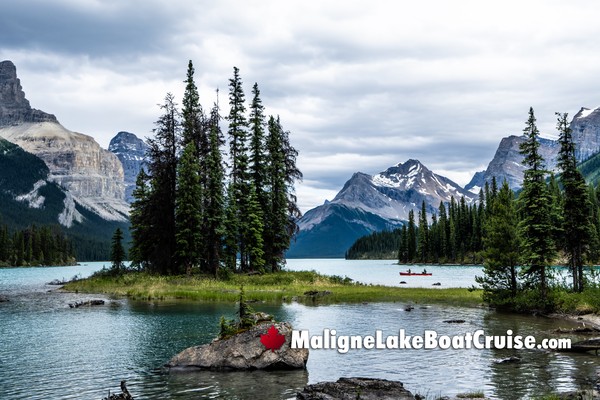
In April, Spirit Island is completely inaccessible to typical visitors, as Maligne Lake remains frozen and the seasonal access infrastructure is not operating. The lake is still covered in thick ice and snow, and the boat routes that normally carry visitors across the water are not running. There are no docks in use, no shoreline departures, and no practical way to reach the island without specialized winter travel.
The surrounding landscape is still deeply winter-bound. Snow blankets the shoreline forests and the towering peaks that frame the lake, including the dramatic section known as the Hall of the Gods. The entire setting takes on a quiet, monochrome appearance, with the frozen lake stretching out like a wide, pale surface beneath the mountains. The island itself sits isolated within this expanse, its trees rising above the snow and ice, but far from reach.
Even for experienced backcountry travelers, April conditions are complex. The ice on Maligne Lake begins to transition late in the season, and while it may still appear solid, underlying changes can make travel unpredictable and unsafe. Combined with deep snow, potential weak ice zones, and variable weather, reaching Spirit Island during this time is not considered a standard or recommended outing.
What makes April unique is the sense of stillness. Without boats, people, or movement on the water, the area exists in a quiet, suspended state between seasons. The iconic view of Spirit Island - normally reflected in open water - is replaced by a frozen, silent landscape where the island appears more distant and isolated than at any other time of year.
Spirit Island in April is more of an unseen presence than a visited destination. It remains locked in winter conditions, inaccessible and untouched, waiting for the late spring thaw and the return of boat access that will once again connect visitors to one of the most recognized scenes in the Canadian Rockies. Spirit Island

Sunwapta Falls in April

Sunwapta Falls in April is defined by transition and contrast. It offers a quieter, less crowded experience where winter still shapes the landscape, but the energy of spring water begins to emerge. The result is a visually striking and atmospheric visit that highlights both the power and the evolving nature of the falls.

Sunwapta Falls in April

Sunwapta Falls in April

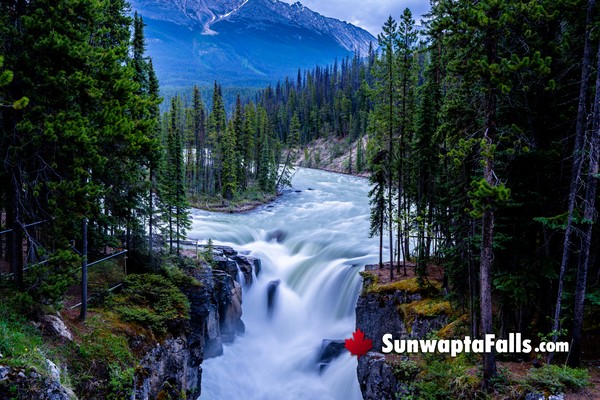
In April, the Sunwapta Falls sits in a late-winter transition where ice and flowing water combine into a dramatic early spring scene. The falls continue to run year-round, fed by the Sunwapta River, but the volume is still relatively moderate compared to the powerful surge of summer melt. What stands out in April is the contrast - dark, fast-moving water cutting through lingering ice formations that cling to the canyon edges and the base of the falls.
The main viewpoint near the bridge is usually accessible, though snow and ice often cover the walking paths and viewing areas. Footing can be slippery, especially in shaded sections where winter conditions persist. From the bridge, you get a clear view of the upper falls plunging around the small island that splits the flow. In April, that island is often still snow-covered, standing out against the darker water and rock, adding to the layered look of the scene.
The surrounding forest and canyon retain a quiet, cold atmosphere. Snow lingers along the ground and in the trees, and the air can feel crisp with a noticeable chill, particularly near the rushing water. As temperatures fluctuate through the day, some ice begins to soften or break away, subtly changing the appearance of the falls over time. The mix of frozen edges and exposed rock gives a more textured and detailed view than during peak summer flow.
Access to the lower falls is more variable in April. Trails leading down can be snow-covered, icy, or partially obscured, making them less reliable than in warmer months. Those who do explore further often find a more rugged and secluded setting, with fewer visitors and a stronger sense of being immersed in the natural environment.
Sunwapta Falls in April is defined by transition and contrast. It offers a quieter, less crowded experience where winter still shapes the landscape, but the energy of spring water is beginning to emerge. The result is a visually striking and atmospheric visit that highlights both the power and the evolving nature of the falls. Sunwapta Falls

Banff, Alberta Map

Banff National Park

Contact Banff April.com

Click to Contact Us